
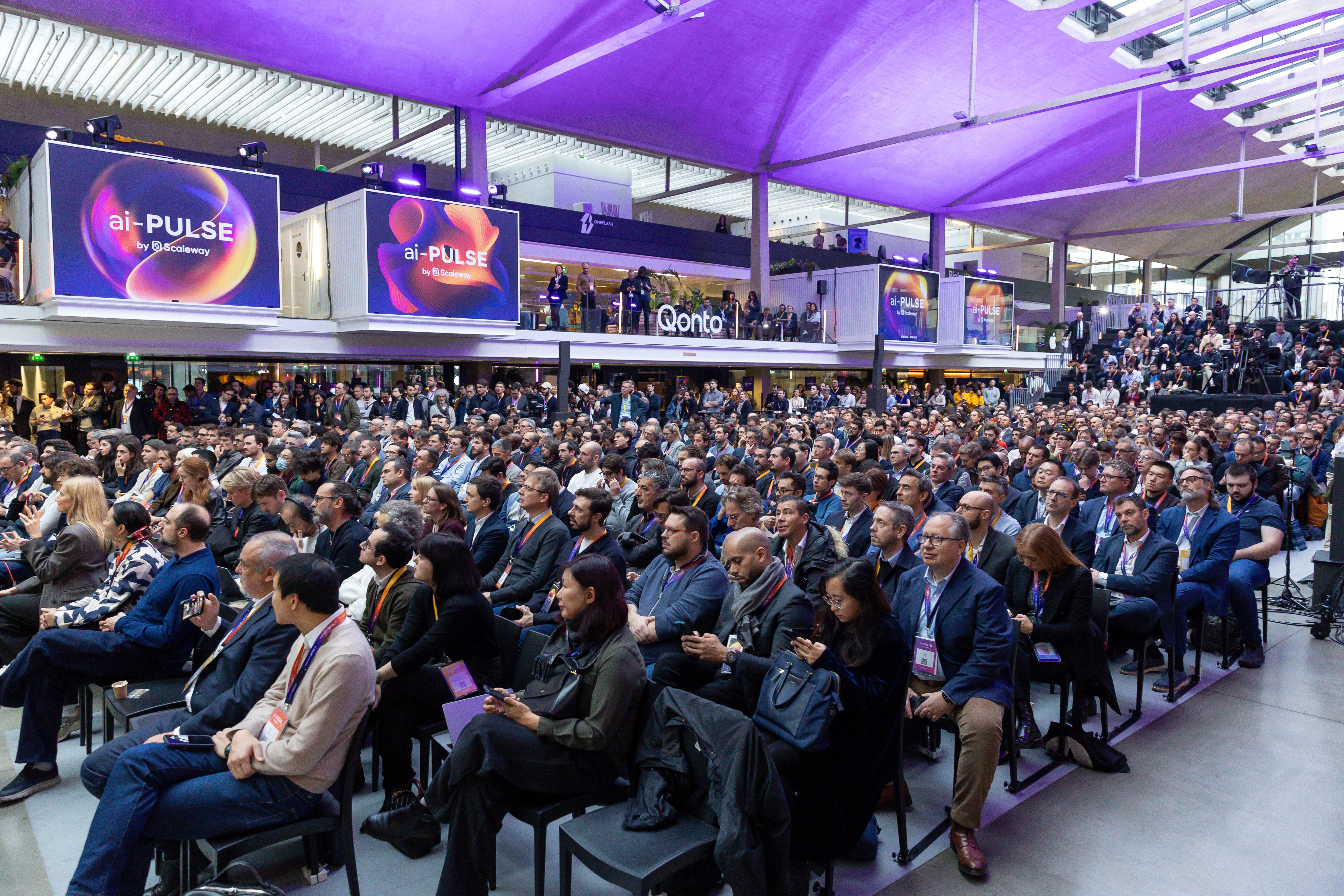
ai-PULSE 2025: Inside the Ideas and Announcements Shaping the Next Era of AI
A look inside the breakthrough ideas and announcements that defined ai-PULSE 2025 — from world models to robotics, voice AI, and Europe’s growing momentum.

AI has entered a new phase: one where systems don’t just assist, but operate.
Equipped with tools, memory, and even access to enterprise software, models are beginning to execute multi-step tasks, interact with legacy systems, and make decisions inside real workflows. The leap from chatbot to agent may look only incremental, but in practice it reshapes everything: infrastructure design, data governance, and accountability.
At ai-PULSE 2025, multiple sessions examined what it takes to move agentic AI from prototype to production. Speakers highlighted the need for stateful execution, full observability, auditable data layers, and architectures built for failure recovery.
What follows is a synthesis of the day’s key discussions on building, scaling, and governing agentic systems — and the architectural principles that will define this next era of AI.
Jérémie Eliahou Ontiveros, Lead Datacenter and Energy Research, Semianalysis
Dan Chester, EMEA Director, CSP Sales, VAST Data
Aurélien Delfosse, Team lead - Core Researcher, H company
Moderated by Jérémie Eliahou Ontiveros (SemiAnalysis), this panel examined how agentic systems move from experimental workflows to enterprise-grade infrastructure, where model design, data architecture, and economics evolve together. Aurélien Delfosse, Team Lead and Core Researcher at H company, anchored the discussion in real deployments, outlining agents built for actual “computer use” in corporate settings — from QA testing agents to workflows that interact with legacy software. These agents combine several coordinated models: a visual localizer to understand interfaces, a policy model that plans actions, and a judge model that critiques and constrains behavior. Training and scaling these systems relies heavily on reinforcement learning, long context windows, and increasingly large model footprints.
Dan Chester (VAST Data) reframed the core bottleneck as data, not compute. As agents act continuously inside enterprises, they must be treated like users with identities, permissions, and traceability. “You’ve really got to log everything,” he emphasized, arguing that compliance and trust depend on knowing not only what decision was made, but why. This shifts the challenge toward building a unified, auditable data layer that serves both classical IT and agentic workloads.
Cost and scalability tied the threads together. Because complex tasks can span dozens of steps, Delfosse noted that optimized, self-hosted stacks can reduce costs by orders of magnitude. (▶️ Watch session in full)
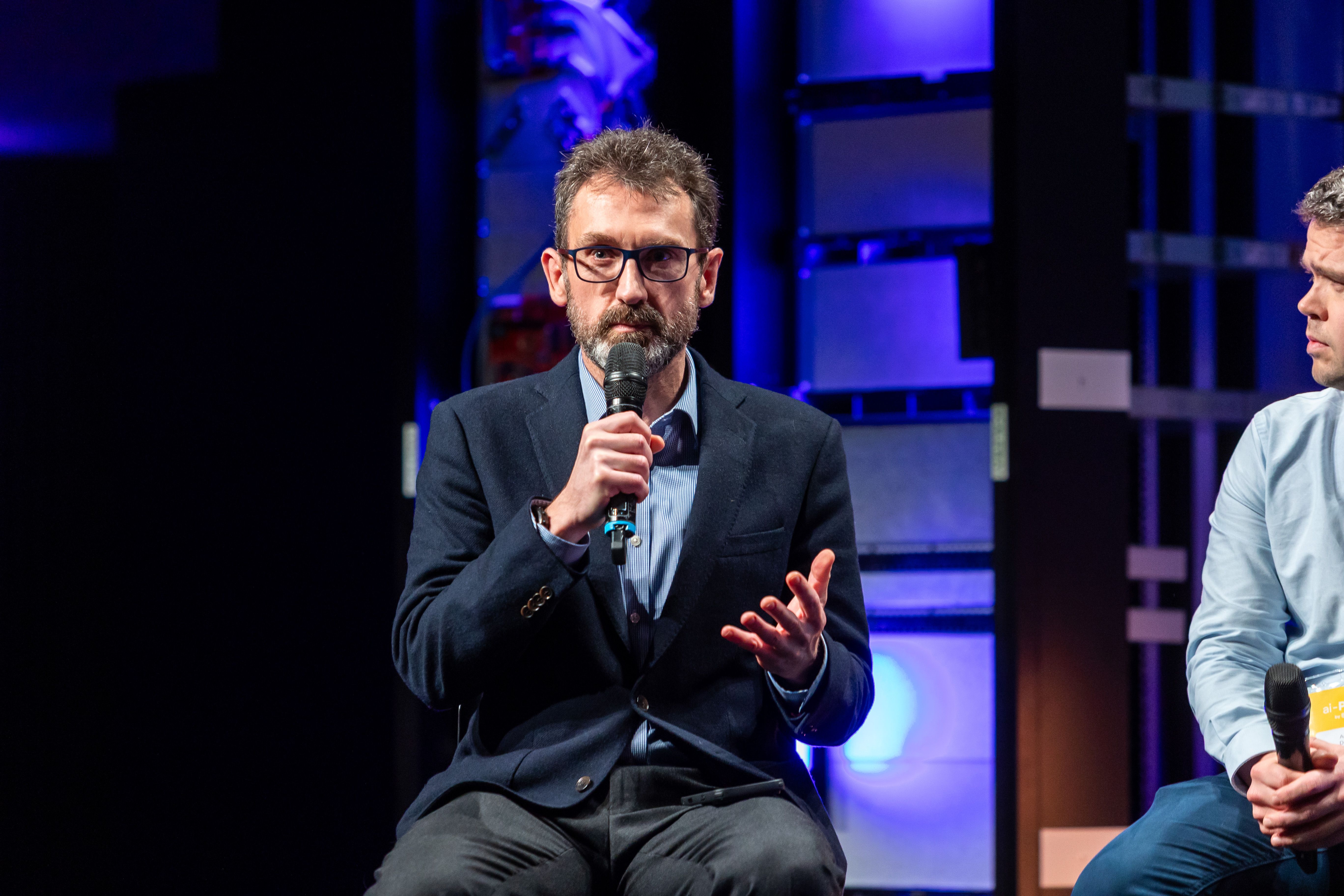
As AI agents move from demos to production, Dust’s experience shows that the real challenge is not building a single assistant, but orchestrating fleets of agents that can operate safely inside organizations. Drawing on two and a half years of iteration, Pauline Pham explained how Dust built an abstraction layer that lets companies ingest internal data and enable non-technical employees to create highly customized agents, without engineers or AI specialists.
A central lesson is that most agent failures come from shallow designs. As Pham put it, many agents fail because “they lack customization… they lack memory… and most of all, they lack context.” Dust therefore focused on custom agents grounded in company knowledge, tools, and “tribal knowledge” that exists only in employees’ heads. This makes it possible to decompose complex tasks into smaller, specialized agents that can then be recombined into reliable workflows.
Governance is equally critical. In preparation for a future where agents will truly work alongside human workers, Dust deliberately decouples human and agent permissions. This allows companies to centrally define what is high-stakes or low-risk, and to let agents safely access data or execute actions that individual employees themselves may not be authorized to perform.
Finally, Dust favors observability over static evaluation, enabling teams to inspect every agent action, iterate locally, and scale agent fleets in production rather than relying on overfitted benchmarks. (▶️ Watch session in full)
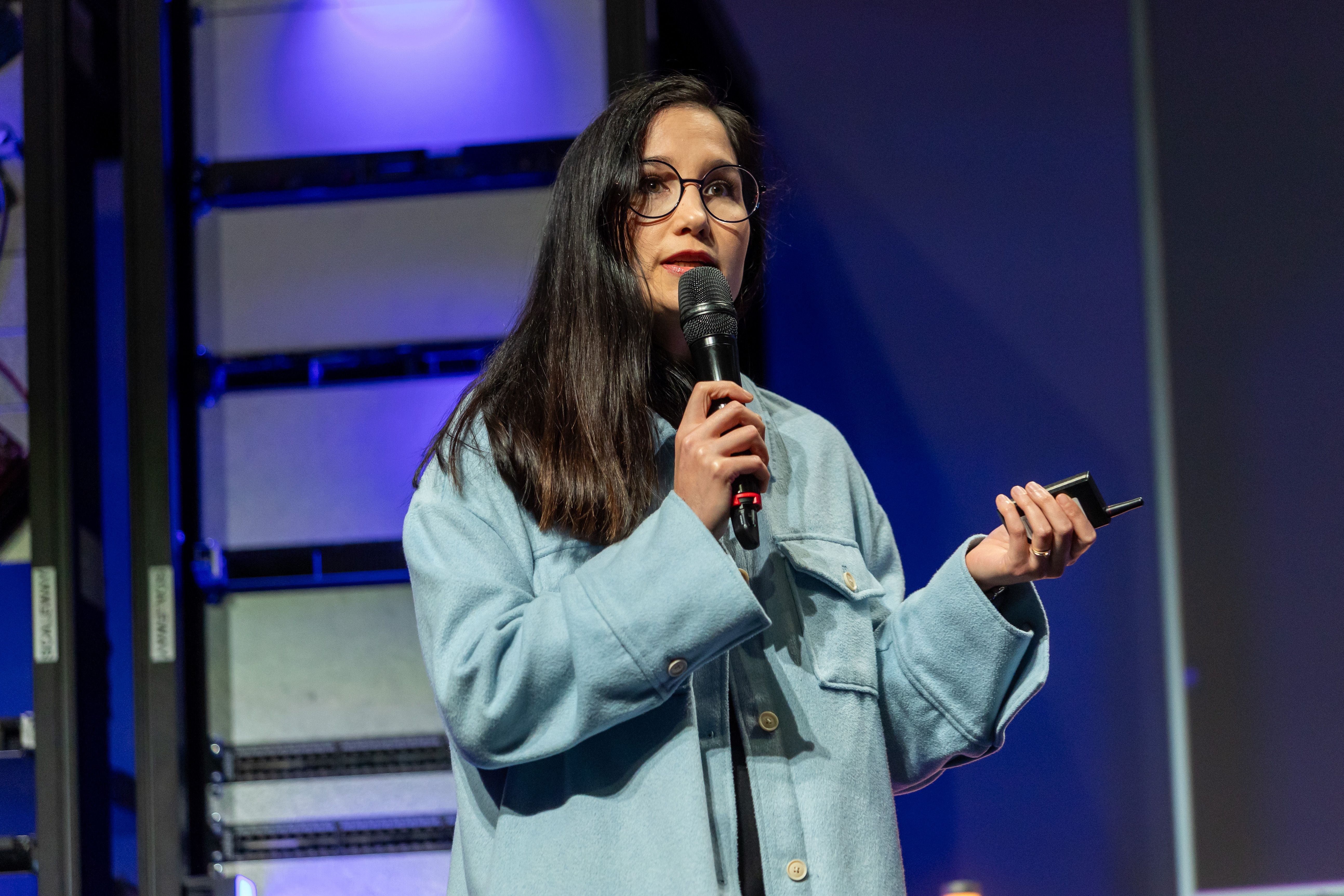
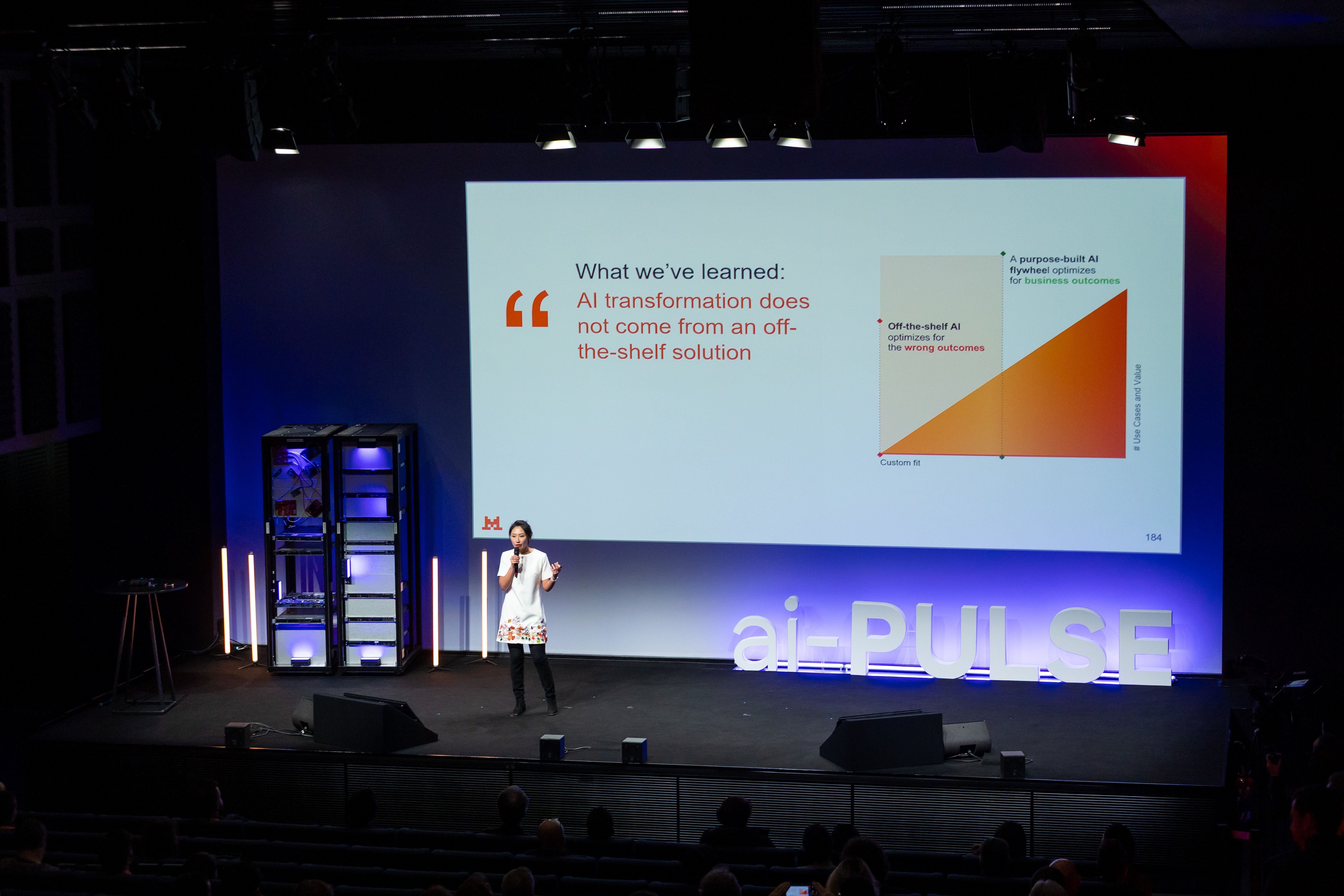
Han Heloir, EMA Solutions Architect at Mistral AI, cut through agentic AI hype by reframing the problem regulated industries actually face. Fast prototypes may work like “fast food,” she argued, but regulated AI must operate more like a Michelin-star restaurant, where every data point can be traced back to its origin through continuous oversight. Speed matters — but consistency, provenance, and explainability matter more.
Drawing on failures in insurance, banking, and financial services, she highlighted three recurring gaps blocking production. First, low visibility: teams often discover issues only after customers are impacted. Second, operational brittleness: long-running workflows like KYC (Know Your Customer) collapse on partial failures without stateful recovery. Third, weak governance: when auditors ask which prompt generated a decision on a specific date, teams lack a single, authoritative answer.
From this, Heloir outlined three non-negotiable architectural principles for production AI. Full observability across model calls and tool usage. Durable, stateful execution that can recover from failures instead of restarting from scratch. And centralized governance, with a single source of truth for models, prompts, datasets, and outputs — fully versioned and auditable. She closed with a challenge to builders: “Are you building AI to impress, or designing it to last?” (▶️ Watch session in full)
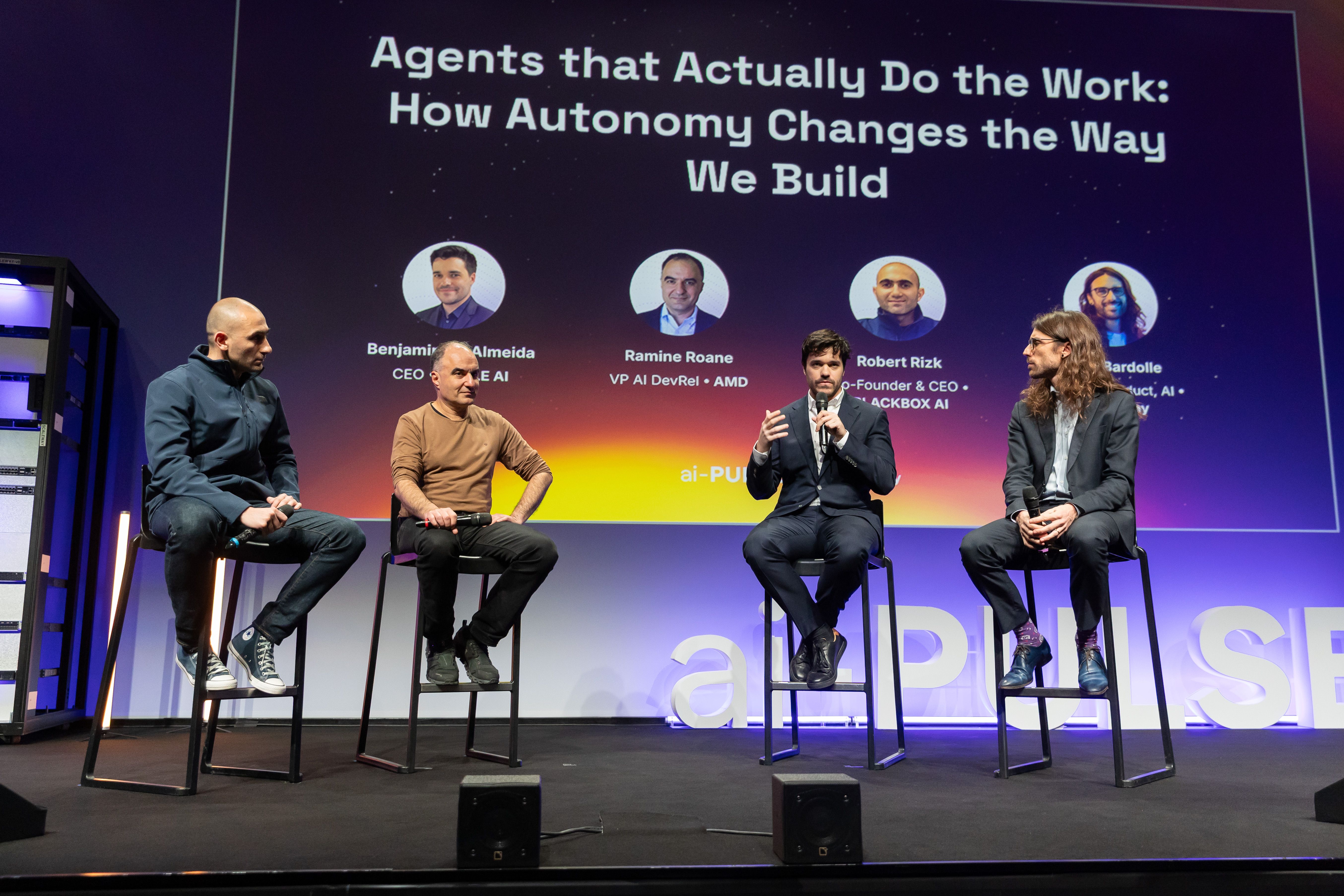
Robert Rizk, Co-Founder & CEO, BLACKBOX AI
Benjamin De Almeida, CEO, SOCLE AI
Ramine Roane, VP AI DevRel, AMD
Fred Bardolle, Head of Product, AI, Scaleway
This panel explored what it takes for agentic AI to operate as a production system rather than a demo. The discussion centered on agents embedded in real workflows where they must “plan, act, and use tools” — but also recover from failure — rather than assist passively.
In regulated environments, SOCLE AI CEO Benjamin De Almeida emphasized that autonomy must remain auditable and monitored. When agents produce outputs with legal or operational consequences, full traceability and human oversight are non-negotiable. The goal should not be full automation, but dependable delegation.
BLACKBOX AI showed how far autonomy can already extend in software engineering. Cofounder and CEO Robert Rizk described the release of “full self coding”, where agents can read real-time production logs, diagnose issues, modify large codebases, open pull requests, run tests, and — when explicitly authorized — merge and redeploy changes. Engineers increasingly supervise rather than execute, as agent iteration cycles accelerate beyond human speed.
On the hardware side of things, AMD broadened the scope by highlighting hybrid architectures: low-latency perception and action on embedded hardware, with heavier reasoning and retraining in the cloud. Across the stack, the message was consistent: agentic AI delivers value only when autonomy is engineered with control, infrastructure, and clear boundaries. (▶️ Watch session in full)
On December 4, 2025 we hosted the third edition of ai-PULSE, Europe's premier AI conference.
With 1,600+ people gathered at STATION F in Paris and thousands more joining online, this was our biggest and most ambitious edition yet — a place where leading researchers, founders, and builders from Europe and beyond came to explore where AI is heading next.
If you couldn’t follow everything live, our white paper captures the key takeaways from across 30+ sessions into one structured recap.
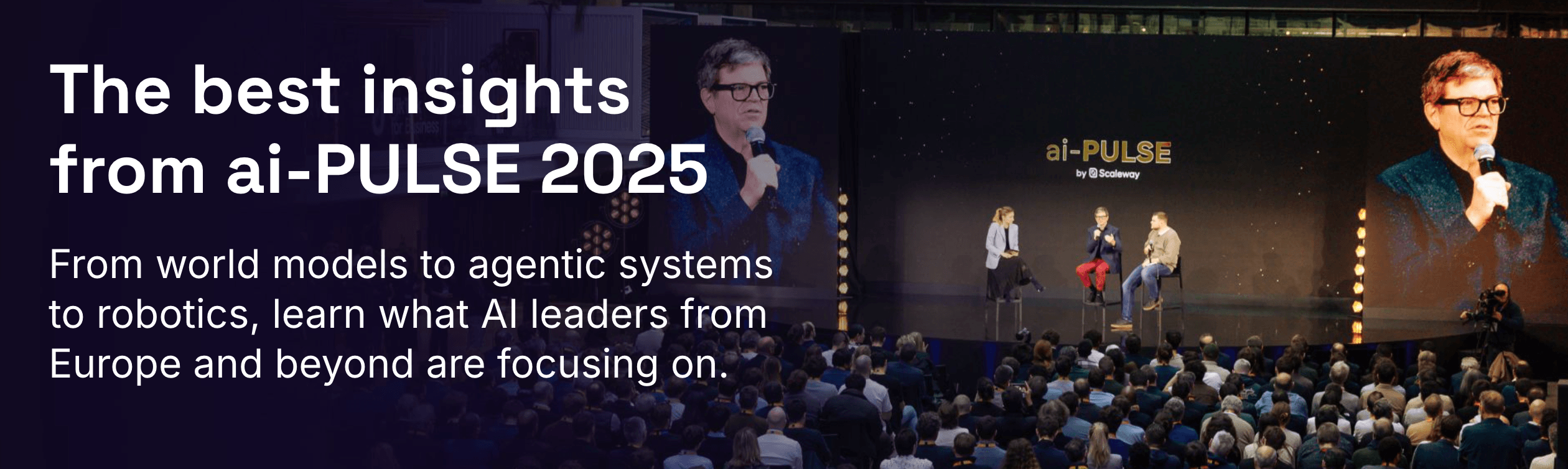
A look inside the breakthrough ideas and announcements that defined ai-PULSE 2025 — from world models to robotics, voice AI, and Europe’s growing momentum.
At ai-PULSE 2025, leaders across industries showed what happens when AI is deployed into real-world environments. This article brings together the key insights from these sessions.
From novel translation architectures to open voice and video systems, ai-PULSE 2025 explored how AI is being applied across modalities. This article distills the key insights from these sessions.