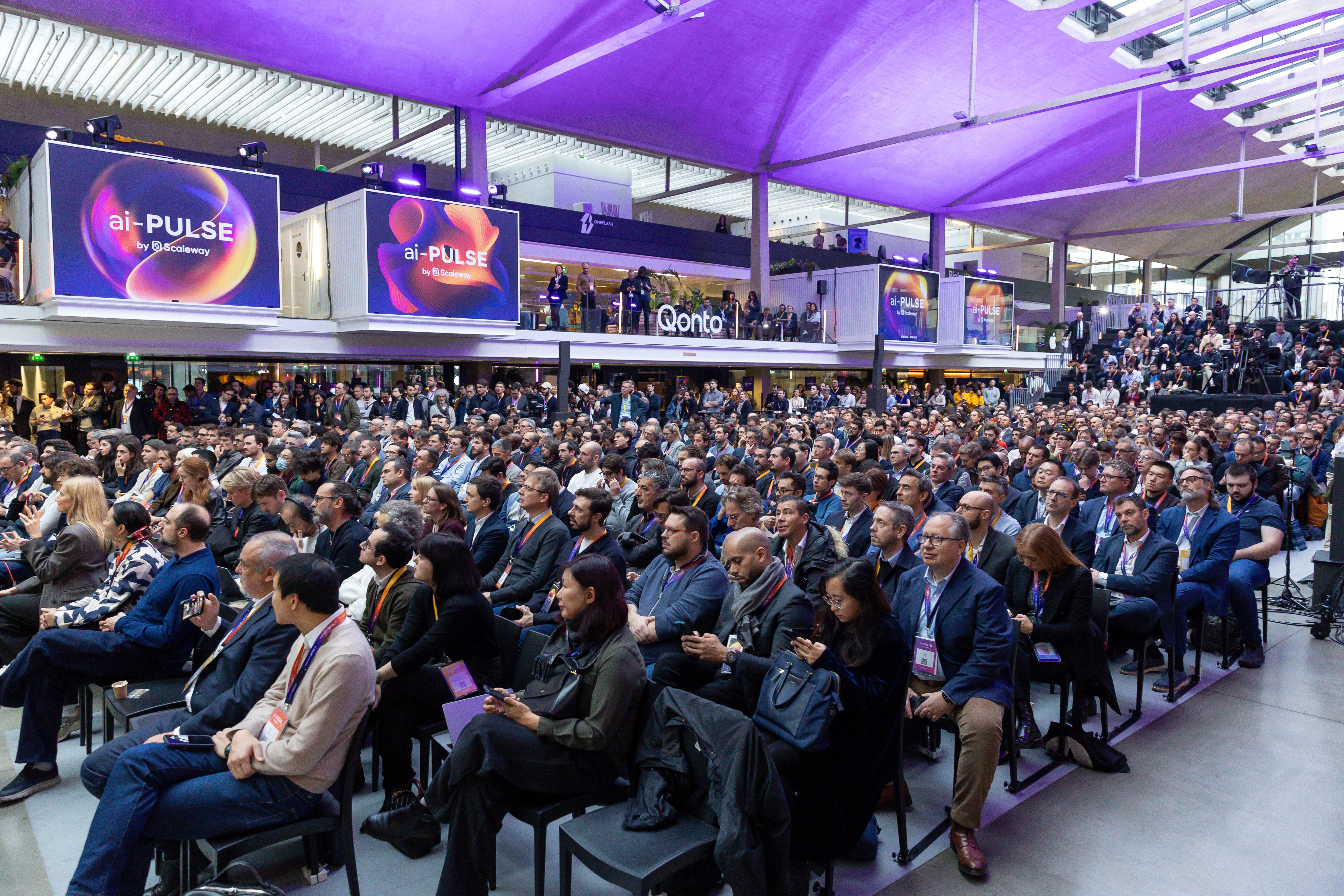
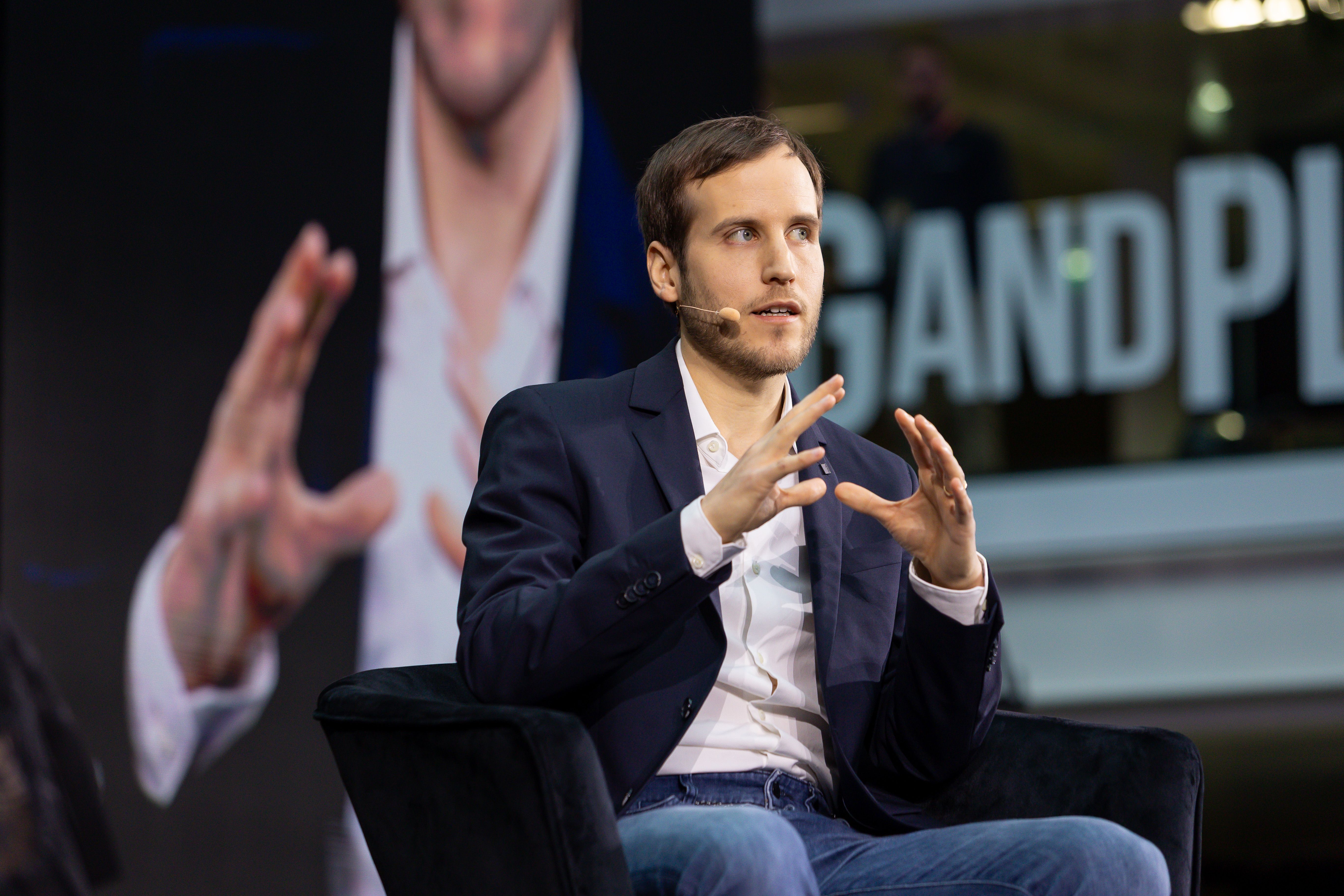
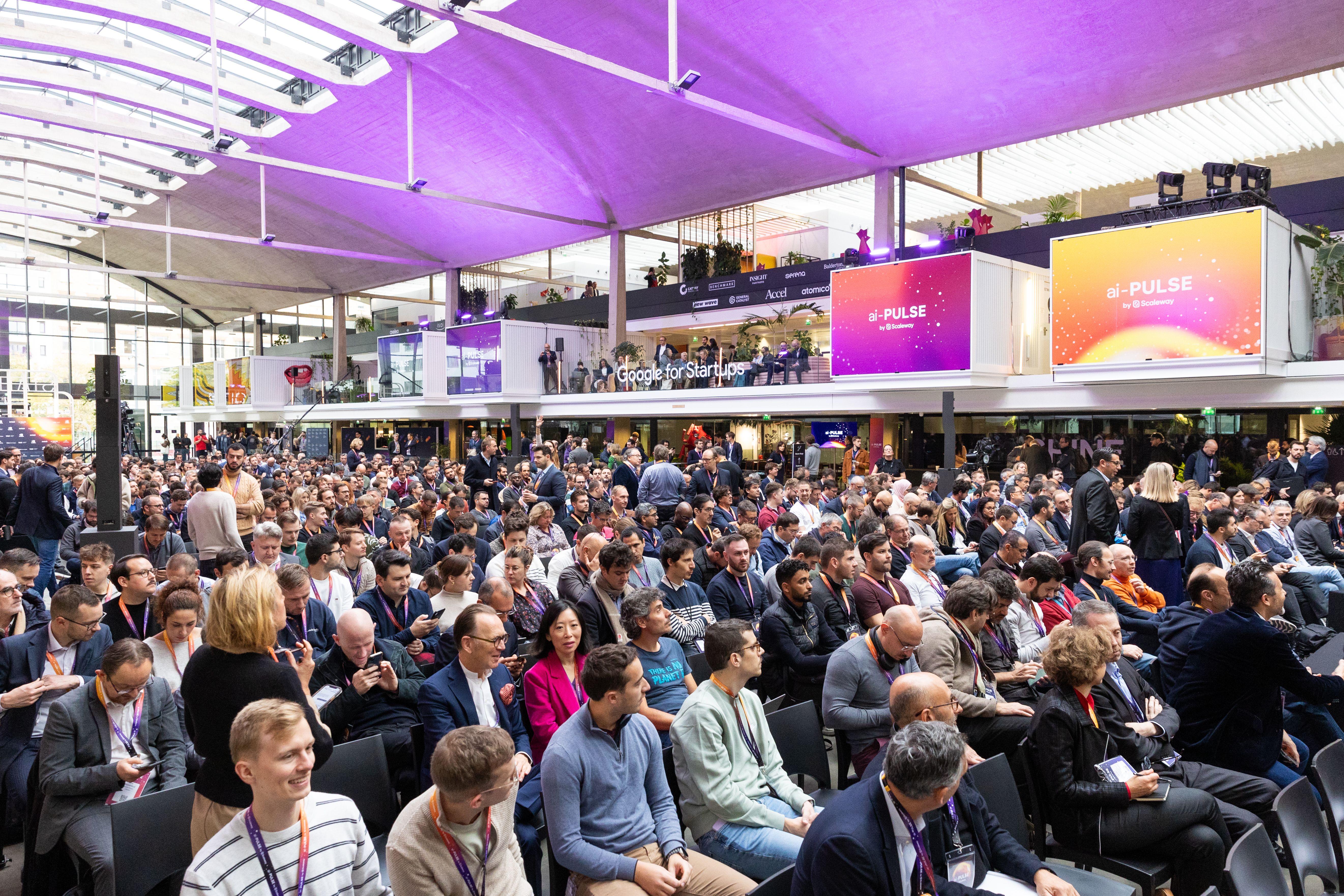
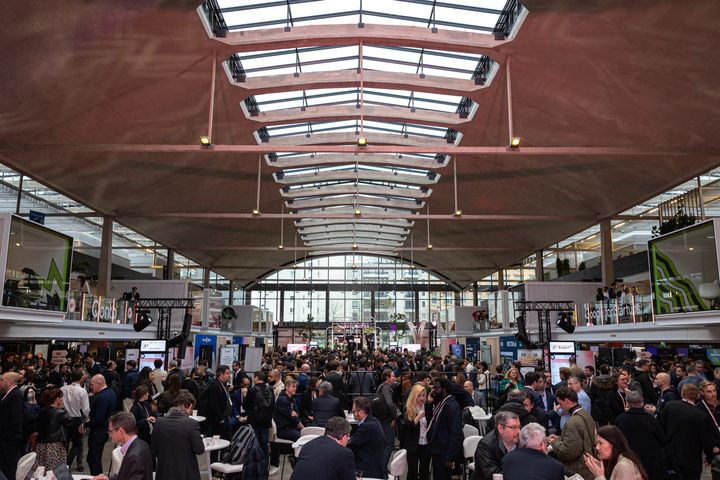
On December 4, we hosted the third edition of ai-PULSE, our annual conference on everything AI. With 1,600+ people gathered at STATION F in Paris and thousands more joining online, this was our biggest and most ambitious edition yet — a place where leading researchers, founders, and builders from Europe and beyond came to explore where AI is heading next.
It also doubled as a global stage for major announcements, from Yann LeCun’s return to France and the launch of his new venture to the debut of Gradium and UMA’s latest fundraising news.
As iliad Group Deputy CEO and Scaleway President Aude Durand promised in her introduction, the goal was simple: “to offer the most expert content, from star scientists in cutting edge labs to CEOs, CTOs of startups that are building breakthrough tech and even specialists implementing new use cases for AI across every industry every day.”
This year’s program revolved around a clear theme — AI is getting smarter, faster, and everywhere at once. Models are evolving from chatbots to agents; workflows are accelerating across every discipline; and AI is moving off screens into speech-native systems, devices, and robots.
That trajectory framed each keynote — from world models to robotics to voice AI — and defined the conversations that followed.
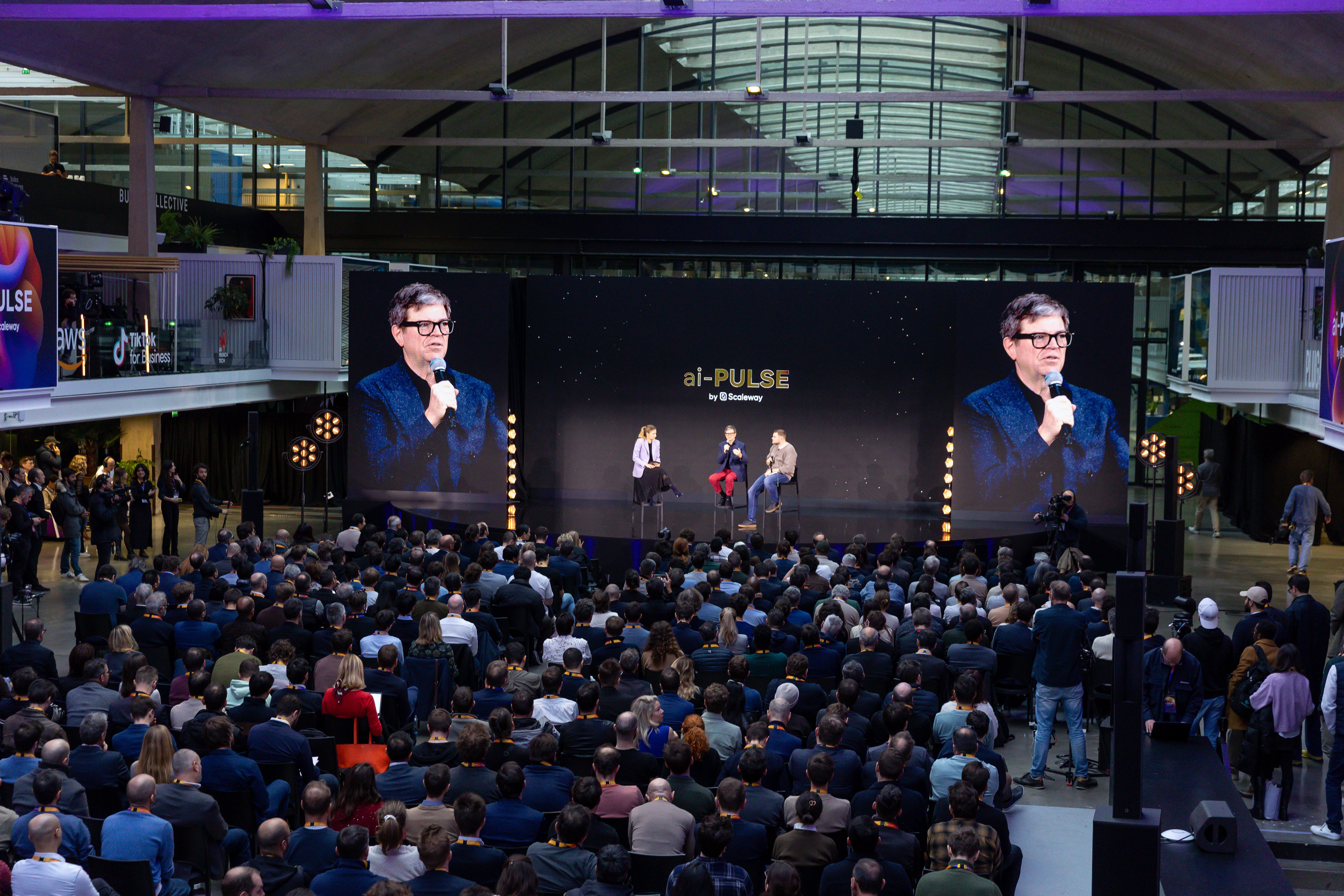
Few conversations captured the audience’s imagination like the opening keynote between Yann LeCun and General Intuition cofounder and CEO Pim de Witte, moderated by Aude Durand. LeCun restated a thesis he has championed for nearly a decade: by design, LLMs can’t give us human-level intelligence. Text is simply too limited a signal — as LeCun put it, “most of human knowledge is not well represented by text.” World models are the missing piece: systems that can perceive, predict, and simulate the dynamics of the world, not just string words together.
LeCun explained why generative architectures struggle with video prediction and physical reasoning: “ It turns out, understanding the physical world is much more difficult than understanding language. (...) And in fact, roboticists have known this for a very long time.” He argued instead for Joint Embedding Predictive Architectures (JEPA), a non-generative approach optimized for learning abstract representations.
Pim de Witte echoed this view: good world models must compute what could happen, not “the next most likely or entertaining frame.” He compared LLMs to a snowball rolling downhill, unaware of obstacles in its path. By contrast, world models learn from perception itself — from pixels, embodiment, and interaction — giving them a grounded understanding of environments rather than a statistical guess about them. As de Witte put it, “It's time we start understanding the world of pixels as well as we understand the world of code and the world of text.”
The conversation closed on a distinctly European note. Both speakers chose to build their next-generation AI labs from Europe, citing talent density and a research culture less fixated on scaling LLMs at all costs. De Witte’s announcement of a scientific partnership between General Intuition and Kyutai underscored the message: Europe is not following in world models; it is leading.
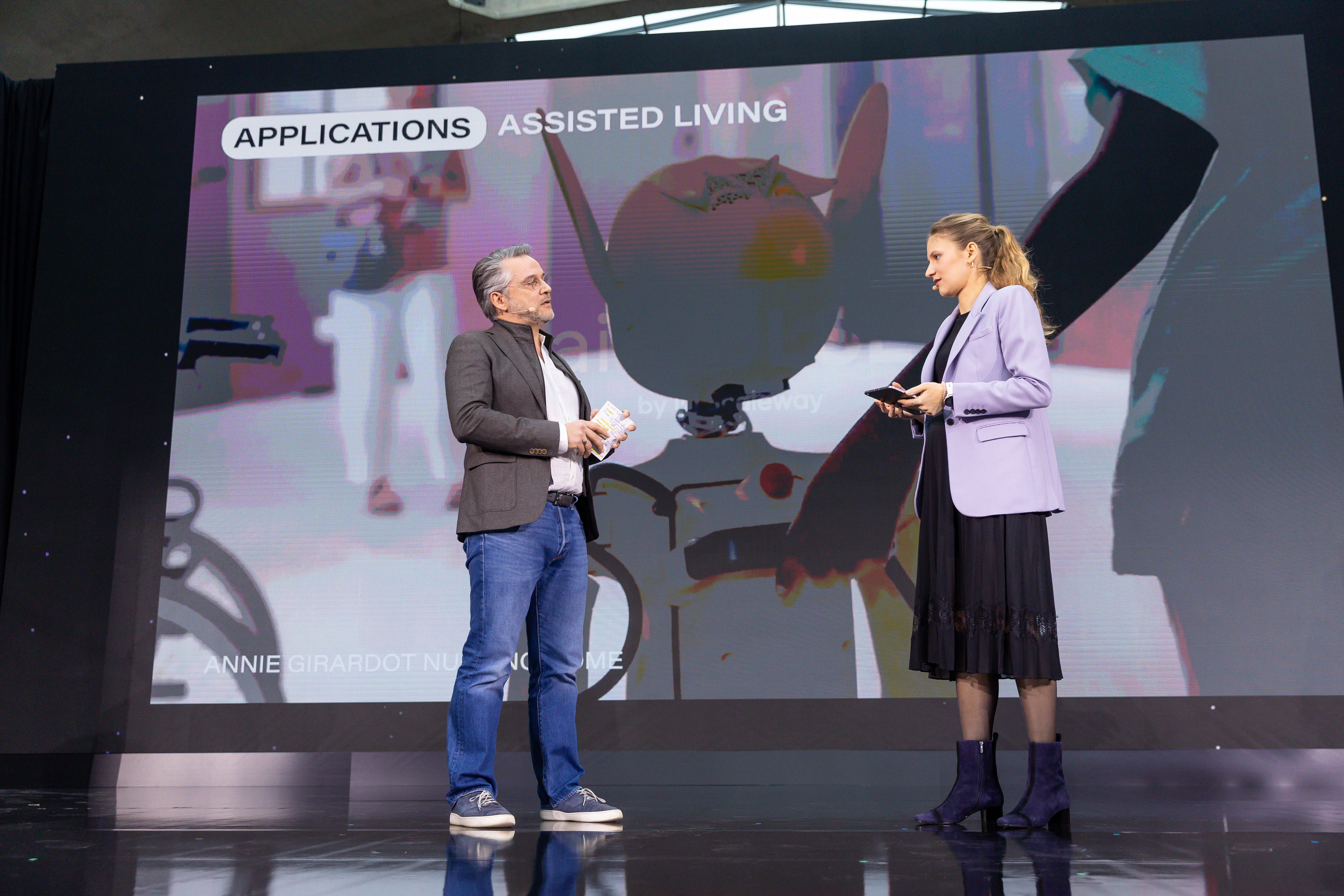
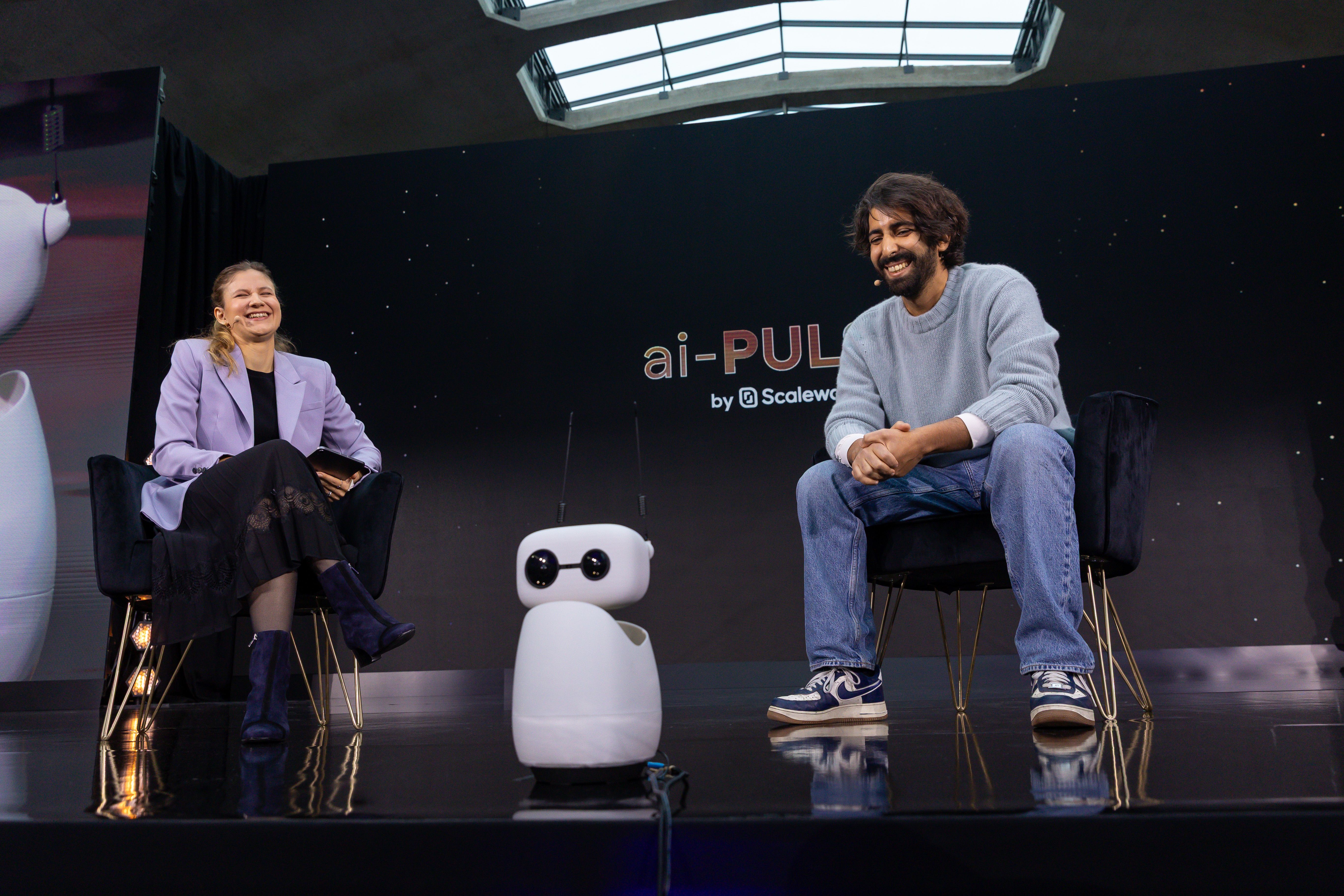
After a theatrical entrance by Mirokaï, Enchanted Tools’s social humanoid robot, cofounder and CEO Jérôme Monceaux stepped on stage to explain the philosophy behind its design: robots meant for real human environments require empathy, anticipation, and safety by design, not just mechanical strength. Drawing on 20 years of robotics work — from Aldebaran’s NAO and Pepper to today’s Mirokaï — Monceaux framed humanoid robotics as a social technology, not an industrial one.
Mirokaï is powered by Gemini Live and a suite of onboard machine-learning models enabling multimodal perception, emotion reading, and real-time behavioral synthesis. But the real magic lies in human-robot interaction. Monceaux described seemingly simple gestures — handing an object to a child, anticipating when to release it, responding to micro-expressions — as some of the hardest problems in robotics. Success, he argued, depends less on complexity and more on “designing the dance between the robot and the user.”
To illustrate, Monceaux proudly described a medical deployment now underway at ICM in: using Mirokaï to assist children undergoing radiotherapy. In a setting where parents cannot enter the treatment room, the robot’s presence has transformed a distressing, hour-long process into one that is calmer, faster, and sometimes even joyful. This emotional shift, in turn, resulted in a "10x factor in the productivity of the machine." The story offered a critical lesson: the value of emotional robotics isn't just in utility, but in how their ability to provide emotional support can create tangible, productive outcomes.
Powering European AI: Scaleway’s Announcements with Damien Lucas (Scaleway)
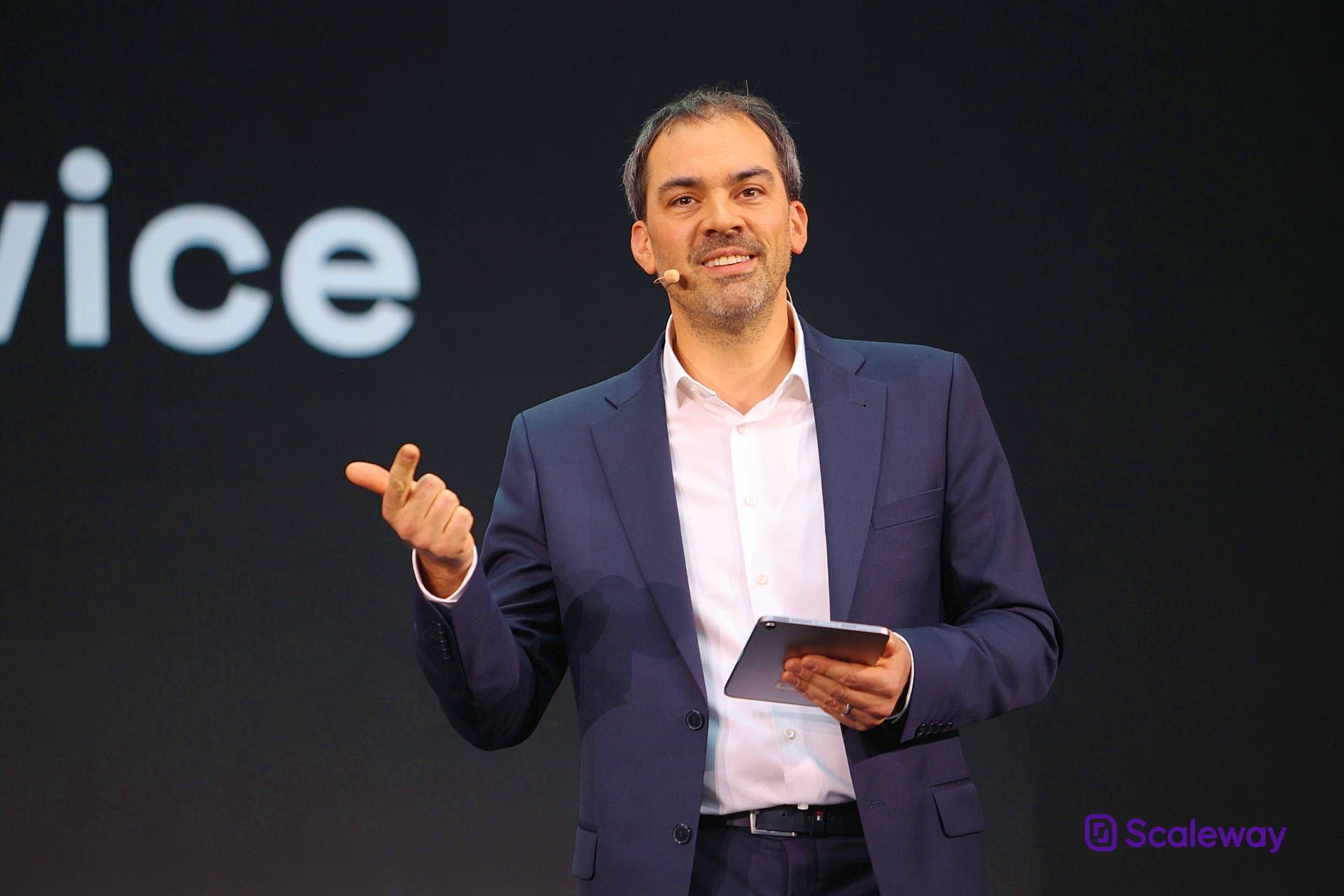
Next up on stage was Scaleway CEO Damien Lucas, who laid out the company’s most ambitious roadmap yet. He began with expansion: after France, the Netherlands, and Poland, Scaleway is now deploying its full cloud and AI product suite in Italy, Sweden, and soon Germany — bringing sovereign European compute closer to builders across the continent.
On hardware, Lucas unveiled a wave of new compute options: next-generation AMD CPUs, Ampere ARM processors, explorations of Fujitsu’s MONAKA-class designs, and, in a European first, NVIDIA Blackwell Ultra B300 GPUs, 50% faster than the B200 and available immediately on Scaleway Cloud. In line with our environmental commitments, all GPUs are now fully integrated with our Environmental Footprint Calculator, empowering customers to monitor, understand, and report on the impact of their AI workflows in real time.
Lucas then highlighted Scaleway’s leap into quantum computing, announcing new partnerships with Pasqal (neutral-atom systems) and IQM (superconducting technology) alongside existing photonic QPUs (Quantum Processing Units). By offering all three major modalities in the cloud, Scaleway is enabling quantum builders across all their needs, from massive combinatorial challenges to financial modeling or running deep general purpose algorithms.
Finally, Lucas detailed major advances in models-as-a-service. Three months after becoming the first European sovereign inference provider on Hugging Face, we became the first European cloud provider to offer support for H Company’s Holo 2, a leading model for agentic purposes.
Scaleway now also offers Mistral’s full Enterprise suite, from Mistral Code (to accelerate software development) to AI Studio (to build custom workflows) to Document AI (to automate document processing). As Lucas put it, “This marks a new win-win for Europe, top European AI companies working together.”
The talk culminated in AION — the European consortium building next-generation AI GigaFactories across Europe. As Lucas emphasized, the partnership spans the full stack, from EDF’s energy expertise to OpCore’s datacenters, Artefact’s and Sopra Steria’s use case implementation, Kyutai and Hugging Face’s model leadership, and, of course, Scaleway’s GPU operations.
The best hardware. The best models. A rapidly-growing footprint. With these announcements, Lucas proved that Europe is not merely catching up, and Scaleway is helping lead the charge.
Read more about these announcements in the full press release.
Building Towards General-Purpose Robotics in Europe with Rémi Cadène (UMA)
The morning then shifted to another major launch: UMA, presented by founder and CEO Rémi Cadene. UMA (short for Universal Mechanical Assistant) aims to build general-purpose humanoid and mobile robots designed to work safely and autonomously alongside humans — an ambition shaped by Cadène’s years working on robotics at Tesla and, most recently, Hugging Face.
For Cadène, the frontier is clear: dexterity. Robots must graduate from structured demos to messy real-world manipulation — folding laundry, brewing coffee, packing boxes. Achieving this requires lightweight, safe hardware and neural architectures that learn from human demonstrations and self-improve through practice, much like autonomous driving systems evolved from rule-based systems to end-to-end learning.
Cadène argued passionately that Europe is the best market to build a robotics leader: it has strong industrial ecosystems, world-class engineering education (at accessible cost!), and a demographic imperative for automation given its aging population. UMA will combine an agnostic AI “brain” with its own European-controlled supply chain for hardware. This was the morning’s clearest statement that Europe’s sovereignty shouldn’t stop at software.
Pursuing New Breakthroughs in Voice AI with Neil Zeghidour (Gradium)
Two years after launching Kyutai on the ai-PULSE stage, Neil Zeghidour returned with a new chapter: Gradium, a spin-off from Kyutai that’s turning cutting-edge voice research into real production systems. Zeghidour explained the gap they observed at Kyutai after open-sourcing models like Moshi: despite massive community enthusiasm, the prototypes weren’t directly usable in industry. They needed lower latency, multi-language support, robustness to noise, and professional-grade audio quality.
Gradium’s mission is to close that gap — offering integrated real-time transcription, translation, and synthesis, with custom personas and emotional control. With that approach, voice agents become as flexible as LLMs, but embodied in expressive sound rather than text. Zeghidour described emerging use cases from gaming to customer support to assistive technologies, all unlocked by a single principle: people would much rather talk to machines than type.
To prove the point, he performed a live demo with a Hugging Face Reachy Mini robot connected to Gradium’s API. The audience watched as the robot shifted voices and languages, responded with humor, and embodied successive personality traits at Zeghidour’s request. It was a striking demonstration of how quickly voice AI is moving from novelty to infrastructure.
Looking Ahead: Open Source and Europe’s Growing AI Momentum
A unifying theme across the keynotes was the central role of open source. Yann LeCun reminded us that the last decade of AI progress was driven by open research and shared models:
“Open research is the best way to make fast progress, first of all. And then it's also the best way to attract the best scientists. If you try to hire scientists and tell them you can't say a word or what, what you're doing, you don't attract the best. Now we are on the cusp of a new revolution and we need contributions from everywhere.”
That spirit ran through the day. UMA’s Rémi Cadène has been contributing to open source since his PhD and helped build Hugging Face’s LeRobot, now a reference library for robot learning. The company’s cofounder and Chief Robot Officer Rob Knight has been open-sourcing robotic hand designs for decades. Gradium itself was created to bring open research into production. In every domain — world models, robotics, voice — openness emerged as the shared foundation.
Another message came through clearly: Europe has both the talent and the mindset to lead the next wave of AI. Cadène highlighted the strength and accessibility of European universities, while LeCun and Pim de Witte noted that Europe is more willing than the US to explore new paradigms like world models.
Taken together, the day was further proof of Europe’s strong momentum in AI.
—-------
A warm thank you to our partners — AMD, Ampere Computing, GIGABYTE, NVIDIA, Motul, and many others — for their trust and support in making this edition possible.
You can already check out replays of all of the above keynotes on our YouTube channel. We’ll be uploading our afternoon talks and workshops shortly — stay tuned!